



 Dynamics 365 Business Central
15 min

Canadian manufacturers are operating in an increasingly complex environment.
Supply chain disruptions, rising costs, labor shortages, shifting customer expectations, global sourcing challenges, and ongoing market uncertainty have fundamentally changed how manufacturing organizations operate.
The ability to see, understand, and respond to supply chain conditions in real time has become a competitive advantage.
Unfortunately, many manufacturers continue to struggle with fragmented systems, disconnected data, spreadsheet-driven planning, and limited operational visibility.
When information is scattered across multiple applications, leaders often struggle to answer critical questions:
- Where are inventory shortages developing?
- Which suppliers are creating the greatest risk?
- What production delays are likely to impact customer deliveries?
- How accurate are demand forecasts?
- What is happening across warehouses, facilities, and distribution centers?
Without clear answers, organizations are forced into reactive decision-making.
This is one reason why Canadian manufacturers are increasingly investing in Dynamics 365 Supply Chain Management Consulting Canada services and modern ERP platforms such as Microsoft Dynamics 365 Finance & Supply Chain Management (F&SCM).
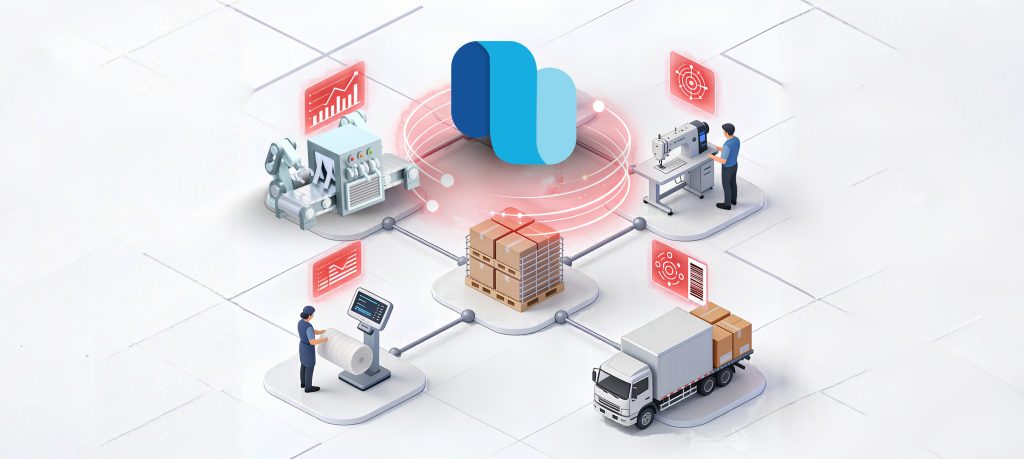
By connecting procurement, inventory, production, warehousing, logistics, and finance into a unified environment, Dynamics 365 helps manufacturers improve visibility, agility, and operational performance.
In this guide, we’ll explore how manufacturers can improve supply chain visibility, overcome operational blind spots, and build a more resilient manufacturing organization using Dynamics 365.
Why Supply Chain Visibility Matters More Than Ever
Over the last several years, manufacturers have experienced unprecedented disruption.
Organizations have faced:
- Supplier shortages
- Transportation delays
- Material cost fluctuations
- Workforce challenges
- Inventory imbalances
- Demand uncertainty
Traditional manufacturing approaches often relied on historical data and periodic reporting.
Today’s environment requires something different.
Manufacturers need:
- Real-time visibility
- Faster decision-making
- Proactive planning
- Greater agility
- Data-driven forecasting
Without visibility, organizations frequently experience:
- Excess inventory
- Stock shortages
- Production bottlenecks
- Missed customer commitments
- Rising operational costs
Supply chain visibility is no longer simply an operational requirement.
It has become a business strategy.
What Is Supply Chain Visibility?
Supply chain visibility refers to an organization’s ability to monitor, understand, and manage activities across the entire supply chain.
This includes visibility into:
Procurement
- Supplier performance
- Purchase orders
- Raw material availability
- Vendor lead times
Inventory
- Stock levels
- Inventory movement
- Warehouse availability
- Reorder points
Manufacturing
- Production schedules
- Capacity utilization
- Material consumption
- Work order status
Distribution
- Fulfillment
- Shipment tracking
- Delivery performance
- Customer orders
Financial Impact
- Procurement spending
- Inventory carrying costs
- Production costs
- Working capital
Organizations with stronger visibility can identify problems sooner and respond before they become larger operational challenges.

The Visibility Challenges Facing Canadian Manufacturers
Many manufacturers operate within complex technology environments built over many years.
Common issues include:
Disconnected Systems
Finance may use one platform.
Production may use another.
Warehouse operations may rely on separate solutions.
Reporting often requires manual consolidation from multiple sources.
This fragmentation creates visibility gaps.
Spreadsheet Dependency
Many organizations continue managing critical supply chain processes through spreadsheets.
Examples include:
- Inventory planning
- Forecasting
- Production scheduling
- Procurement tracking
While spreadsheets remain useful tools, they are not ideal for enterprise-wide operational visibility.
Delayed Reporting
Reports often reflect what happened yesterday, last week, or last month.
By the time leadership receives critical information, corrective action may already be limited.
Limited Supplier Visibility
Organizations may struggle to monitor:
- Vendor performance
- Delivery reliability
- Procurement risk
- Supplier dependencies
Without timely insight, risks remain hidden until they impact operations.
Inaccurate Inventory Data
Inventory inaccuracies can create:
- Production delays
- Emergency purchases
- Customer dissatisfaction
- Increased carrying costs
Visibility challenges often make these issues difficult to identify quickly.
How Dynamics 365 Improves Supply Chain Visibility
Microsoft Dynamics 365 Supply Chain Management helps connect operational processes into a unified environment where decision-makers have access to more timely and accurate information.
Instead of relying on disconnected systems, organizations can create a centralized view across the supply chain.
- End-to-End Supply Chain Visibility
One of the most significant advantages of Dynamics 365 is the ability to connect multiple business functions.
Organizations gain visibility across:
- Procurement
- Inventory
- Warehousing
- Manufacturing
- Finance
- Logistics
Rather than viewing individual departments separately, leadership can evaluate supply chain performance as a connected system.
This enables better decision-making and improved responsiveness.
- Real-Time Inventory Visibility
Inventory is one of the most important assets in manufacturing organizations.
However, many companies struggle with visibility into:
- Current inventory levels
- Inventory location
- Inventory availability
- Slow-moving inventory
- Inventory risks
Dynamics 365 helps organizations monitor inventory in real time across:
- Warehouses
- Distribution centers
- Manufacturing facilities
- Multiple locations
This improves inventory control while reducing uncertainty.
- Better Supplier Performance Monitoring
Supplier reliability plays a significant role in manufacturing success.
Organizations need insight into:
- Supplier delivery performance
- Lead times
- Procurement activity
- Vendor effectiveness
- Purchasing trends
Dynamics 365 helps procurement teams monitor supplier performance and identify patterns that may create future supply chain risks.
This allows organizations to make more informed sourcing decisions.
- Improved Demand Forecasting
Forecast accuracy directly influences:
- Production schedules
- Procurement planning
- Inventory investments
- Service levels
Poor forecasting often creates:
- Overstock situations
- Inventory shortages
- Excess carrying costs
- Production inefficiencies
Dynamics 365 supports improved forecasting by combining operational data across multiple business functions.
Organizations gain greater insight into demand patterns and planning requirements.
- Enhanced Manufacturing Visibility
Manufacturing leaders need insight into:
- Production schedules
- Capacity utilization
- Material availability
- Resource allocation
- Production performance
Without visibility, it becomes difficult to identify operational bottlenecks.
Dynamics 365 helps organizations monitor production activities more effectively while improving coordination between manufacturing, procurement, and inventory teams.
- Stronger Warehouse Management
Warehouse operations play a crucial role in supply chain performance.
Poor visibility frequently results in:
- Shipping delays
- Inventory discrepancies
- Higher labor costs
- Fulfillment challenges
Dynamics 365 helps organizations improve visibility into:
- Inventory movement
- Warehouse operations
- Picking activities
- Fulfillment performance
- Storage utilization
This can improve both operational efficiency and customer service.
- Integrated Financial and Supply Chain Insights
One of the largest challenges for manufacturers is connecting operational decisions with financial outcomes.
Organizations need to understand:
- Inventory carrying costs
- Procurement spending
- Production costs
- Supplier performance impacts
- Working capital implications
Dynamics 365 connects financial and operational information, helping leadership evaluate the complete business impact of supply chain decisions.
Supply Chain Visibility and ERP Modernization
Many visibility challenges originate from outdated ERP environments.
Legacy systems often create:
- Data silos
- Limited reporting
- Manual processes
- Integration challenges
- Reduced agility
This is why supply chain transformation is frequently tied to broader ERP modernization initiatives.
Organizations pursuing ERP Modernization Canada strategies often cite supply chain visibility as one of the primary reasons for modernization.
A modern ERP platform creates a foundation for:
- Better reporting
- Improved planning
- Greater operational transparency
- Enhanced collaboration
- Future AI initiatives
How Manufacturers Can Build a Supply Chain Visibility Strategy
Technology alone does not improve visibility.
Organizations must also evaluate processes, governance, and business objectives.
Step 1: Establish Visibility Objectives
Identify key business priorities.
Examples include:
- Reducing shortages
- Improving inventory turns
- Strengthening customer fulfillment
- Managing supplier risk
Visibility initiatives should align with business outcomes.
Step 2: Evaluate Data Quality
Visibility depends on trustworthy information.
Organizations should review:
- Inventory data
- Vendor data
- Product information
- Customer records
Poor data quality limits the effectiveness of even the most advanced systems.
Step 3: Standardize Processes
Inconsistent processes often create reporting and operational challenges.
Organizations should evaluate opportunities to standardize:
- Procurement
- Inventory control
- Production planning
- Reporting
This creates a stronger operational foundation.
Step 4: Improve Cross-Department Collaboration
Supply chain visibility requires collaboration across:
- Finance
- Procurement
- Operations
- Manufacturing
- Warehousing
- Executive leadership
Disconnected teams frequently create disconnected information.
Step 5: Invest in the Right Technology Foundation
Organizations seeking long-term improvement often require modern platforms capable of supporting:
- Real-time visibility
- Automation
- Advanced reporting
- Analytics
- AI readiness
Dynamics 365 Supply Chain Management is increasingly becoming that foundation.
Why Canadian Manufacturers Are Choosing Dynamics 365
Manufacturers across Canada are modernizing their supply chain operations because they need more than transaction processing.
They need:
✅ Better visibility
✅ Greater agility
✅ Stronger forecasting
✅ Operational scalability
✅ Connected data
✅ Faster decision-making
✅ Improved resilience
Dynamics 365 helps manufacturers connect critical operational functions while creating a foundation for future innovation.
Why Work with a Dynamics 365 Supply Chain Management Consulting Partner in Canada?
Technology selection is only one part of a successful transformation.
The implementation partner also plays a major role in long-term success.
Manufacturers should evaluate partners based on:
Industry Experience
Do they understand manufacturing operations?
Supply Chain Expertise
Can they improve processes, not just implement software?
Implementation Experience
Have they delivered similar projects successfully?
Microsoft Ecosystem Knowledge
Can they support:
- Dynamics 365
- Power Platform
- Microsoft 365
- Azure
- AI initiatives
within a broader business strategy?
Change Management Capabilities
Can they support training, adoption, and organizational readiness?
The right partner helps organizations achieve business outcomes, not simply deploy technology.
Why Manufacturers Choose Cambay Solutions
Cambay Solutions helps Canadian manufacturers modernize operations through Microsoft technologies and industry-focused ERP expertise.
Our capabilities include:
- Dynamics 365 Finance
- Dynamics 365 Supply Chain Management
- Manufacturing transformation
- ERP modernization
- Inventory optimization
- Supply chain consulting
- Power Platform integration
- Analytics and reporting
- Ongoing support and optimization
We focus on helping organizations improve visibility, strengthen operational performance, reduce complexity, and prepare for future growth.
Frequently Asked Questions (AEO & GEO Optimized)
What is supply chain visibility?
Supply chain visibility is the ability to monitor and understand activities across procurement, inventory, manufacturing, warehousing, logistics, and supplier operations in real time.
Why is supply chain visibility important for manufacturers?
Supply chain visibility helps organizations improve decision-making, identify risks earlier, reduce inventory challenges, improve customer fulfillment, and strengthen operational performance.
How does Dynamics 365 improve supply chain visibility?
Dynamics 365 connects procurement, inventory, manufacturing, warehousing, logistics, and finance data into a centralized platform that supports real-time reporting and operational visibility.
What industries benefit from Dynamics 365 Supply Chain Management?
Industries commonly benefiting from Dynamics 365 include:
- Manufacturing
- Distribution
- Wholesale
- Consumer Goods
- Industrial Products
- Multi-entity organizations
Can Dynamics 365 help reduce inventory shortages?
Yes. Improved inventory visibility, forecasting, procurement planning, and supply chain insights can help organizations identify inventory risks earlier and make more informed decisions.
What are the signs of poor supply chain visibility?
Common indicators include:
- Manual reporting
- Spreadsheet dependency
- Inventory inaccuracies
- Supplier performance issues
- Production delays
- Disconnected systems
- Delayed decision-making
How does supply chain visibility support AI initiatives?
AI solutions perform best when organizations have connected systems, trusted data, and clear operational visibility. Modern supply chain platforms provide a stronger foundation for future AI-driven analytics and automation.
Why should manufacturers modernize their ERP systems?
ERP modernization helps manufacturers improve operational visibility, strengthen forecasting, reduce manual work, support growth, and create a foundation for future technologies.
How do I choose a Dynamics 365 Supply Chain Management Consulting Partner in Canada?
Look for a partner with:
- Manufacturing experience
- Supply chain expertise
- Dynamics 365 implementation capabilities
- Microsoft ecosystem knowledge
- Change management services
- Long-term support capabilities
Ready to Improve Supply Chain Visibility?
If your manufacturing organization struggles with inventory blind spots, delayed reporting, supplier uncertainty, fragmented systems, or limited operational visibility, it may be time to evaluate a new approach.
Supply chain visibility is no longer a competitive advantage reserved for large enterprises.
It has become a requirement for growth, resilience, and long-term success.
Cambay Solutions helps Canadian manufacturers transform supply chain operations with Dynamics 365 Supply Chain Management and ERP modernization strategies designed for measurable business outcomes.
Schedule a Supply Chain Visibility Assessment
Discover how your organization can:
✅ Improve inventory visibility
✅ Strengthen forecasting accuracy
✅ Reduce operational inefficiencies
✅ Improve supplier performance management
✅ Support AI readiness
✅ Build a more resilient manufacturing operation
Talk to a Dynamics 365 Supply Chain specialist at Cambay Solutions and start building a smarter, more connected supply chain.